Side Dishes
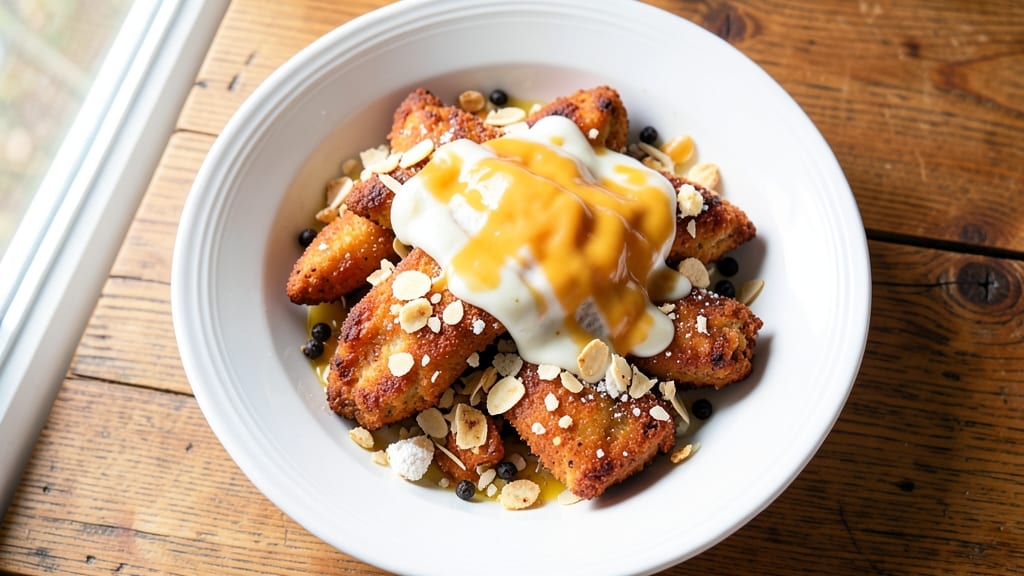
The original Kellogg's Cornflake Chicken recipe delivers that iconic crispy crunch and cheesy indulgence you crave—without the mystery of store-bought shortcuts. This classic technique transforms simple chicken into golden, shatteringly crispy bites that balance sweet cornflakes and rich cheese perfectly.
I’ve perfected it over years of testing, ensuring every piece stays crispy outside while staying tender inside.
What makes this recipe special is the two-step breading process that creates that signature texture: crushed cornflakes mixed with seasoned flour for crunch, followed by a light egg wash for adhesion.
Whether you fry or air-fry, the secret lies in maintaining 350–375°F—hot enough for crispiness without burning. The result? A dish that’s foolproof for weeknight dinners or game day spreads.
By the time you serve it, you’ll have crispy, cheese-coated chicken that’s impossible to resist—each bite offers that perfect contrast of crunch and creamy pull-apart texture. Pair it with honey mustard for dipping or serve alongside coleslaw and roasted potatoes for a complete meal.
The prep takes just 15 minutes, while the cook time is a quick 12–15 minutes, making it ideal for busy evenings.
This recipe works for tenders, cutlets, or nuggets, so you can adapt it to your family’s preferences. The key is patience during breading and careful monitoring while cooking—trust the process, and you’ll achieve restaurant-quality results every time. Let’s get started on recreating this nostalgic favorite at home.
Ingredients for original kellogg's cornflake chicken
Crispy cornflakes meet creamy cheese—just 13 ingredients for nostalgic comfort food magic.
| Ingredient | Amount | Notes |
|---|---|---|
| Boneless, Skinless Chicken Tenders 🍗 | 1 ½ lb | Cut into 1-inch pieces |
| Original Kellogg's Cornflakes 🍞 | 1 ½ cups | Crushed into fine crumbs |
| All-Purpose Flour 🌾 | ½ cup | For initial dredging |
| Large Eggs 🥚 | 2 whole | Lightly beaten for coating |
| Shredded Cheddar Cheese 🧀 | 1 ½ cups | Medium sharp, freshly shredded |
| Extra-Sharp Cheddar Cheese 🧀 | ½ cup | For extra flavor depth |
| Diamond Crystal Kosher Salt 🧂 | 1 ½ tsp | For seasoning flour |
| Ground Black Pepper 🌶️ | ½ tsp | Freshly cracked |
| Garlic Powder 🧄 | ½ tsp | For flavor enhancement |
| Onion Powder 🧅 | ½ tsp | For depth of flavor |
| Vegetable Oil 🫒 | 2 cups | For deep frying (or air fryer oil) |
| Unsalted Butter 🧈 | ¼ cup | Melted for cheese mixture |
| Honey Mustard 🍯 | ½ cup | For serving (optional) |
The Kellogg's Cornflakes are non-negotiable here—original flavor only (no honey-nut or frosted). Grab the family-sized box from the cereal aisle at Walmart or Target for the best price. For the cheese, sharp cheddar makes all the difference—Kraft 2% works in a pinch, but Cabot or Tillamook elevate it. The chicken should be tender but not pre-breaded—Perdue or Tyson tenders work perfectly. If you're using cutlets, pound them to ¼-inch thickness for even cooking. The garlic and onion powders? McCormick or Badia are my go-tos—they've got that consistent flavor you can rely on.
No cornflakes? Crushed Ritz crackers or panko work, but the sweetness is different. Short on sharp cheddar? Pepper Jack adds heat, or Colby Jack for a milder taste. The honey mustard can be store-bought (Hellmann's or French's), but homemade (mix Dijon mustard with honey) is way fresher. For the two-step breading, don't skip the flour dredge first—it helps the cornflake mixture stick better. If you're air-frying, lightly spray the basket with oil between batches to prevent sticking. The vegetable oil should be high-smoke point—Avocado or canola oil are best for frying.
This keeps 3 days in the fridge if stored in an airtight container, but honestly? It's best eaten fresh. For freezing, bread the chicken fully, then freeze on a tray before transferring to a bag—lasts 2 months. Reheat in a 350°F oven for 10 minutes or air fryer for 5 minutes to restore crispiness. Leftovers? Crush and sprinkle over salads or melt into mac and cheese for a fun twist. The cheese mixture can be prepped ahead—just store it separately until ready to use.
Why You'll Love This Recipe
- Pantry Magic: I’ll never buy pre-breaded tenders again—this uses stuff I already have. Crushed cornflakes, flour, and eggs? That’s my new shortcut for crispy, homemade texture without the store-bought hassle.
- Cheesy Crunch Surprise: Between us, the cheddar melts into the cornflake crust while keeping that satisfying crunch. It’s like chicken nuggets grew up but still taste like comfort food.
- Game for Any Night: Weeknight dinner? Game. Potluck side? Done. Leftovers reheat like a dream (yes, even the crisp stays intact). My kids eat it cold in lunchboxes—no complaints.
- Budget Crispy Win: A bag of cornflakes and a block of cheddar stretch this recipe farther than any takeout order. Plus, the ingredients cost less than half of what I’d pay for frozen nuggets. Smart move.
Step-by-step instructions for original Kellogg's cornflake chicken
Here's how to create that perfect balance of crispy cornflake crust and creamy cheese coating.
Prepare the Chicken and Seasoned Flour Mixture
Cut the 1.5 lb boneless, skinless chicken tenders into 1-inch pieces and pat them completely dry with paper towels. This drying step is crucial—it ensures maximum crispiness when we fry them later. In a shallow bowl, combine the 0.5 cup all-purpose flour, 1.5 tsp diamond crystal kosher salt, 0.5 tsp ground black pepper, 0.5 tsp garlic powder, and 0.5 tsp onion powder. Mix thoroughly until the seasonings are evenly distributed throughout the flour.
I like to use my fingers to break up any flour clumps, ensuring a fine, even coating. This seasoned flour will create the foundational flavor for our crispy crust. Keep this mixture ready for the next step—it's where all the magic begins for that perfect texture contrast we're aiming for.
Create the Cornflake Crumb Coating
In a separate bowl, crush the 1.5 cups original Kellogg's cornflakes into fine crumbs using a rolling pin or the bottom of a heavy pan. You want them to be as fine as possible—think about the texture of breadcrumbs, but with that signature cornflake crunch. This is what will give your chicken that signature crispy exterior that holds up perfectly.
Here's the thing—don't pulse them in a food processor or you'll lose that delicate crunch. By hand-crushing, you maintain the right texture while still getting that fine, even coating. Once you've achieved your fine crumbs, set this bowl aside. We'll use it after the flour dredging to create that double-layered crust that makes this recipe so special.
Set Up the Coating Stations and Fry the Chicken
Create three separate coating stations: one with the seasoned flour mixture, one with the 2 whole large eggs lightly beaten, and one with the crushed cornflake crumbs. Dip each chicken piece first into the beaten eggs, allowing any excess to drip off, then coat thoroughly in the cornflake crumbs, pressing gently to ensure they adhere completely. This double-coating technique is what creates that perfect balance of crispy exterior and tender interior.
Heat 2 cups vegetable oil in a deep skillet or Dutch oven to 350°F. You'll know it's ready when a small piece of bread dropped into the oil sizzles immediately and floats. Working in batches to avoid overcrowding, carefully slide the cornflake-coated chicken pieces into the hot oil. Fry for 3-4 minutes per side until they reach a deep golden brown color. This is where the crispy promise comes true—the cornflakes should be crunchy to the touch and the chicken should be cooked through to 165°F internally.
Prepare the Cheese Sauce and Assemble
While the chicken is frying, melt the 0.25 cup unsalted butter in a saucepan over medium heat. Stir in the 1.5 cups shredded cheddar cheese and 0.5 cup extra-sharp cheddar cheese until completely melted and smooth. This is where we create that creamy element that perfectly complements the crispy cornflake exterior. The extra-sharp cheddar adds that extra depth of flavor that makes this dish truly special.
Once the chicken is fried to golden perfection, transfer it to a paper towel-lined plate to drain any excess oil. Then, immediately pour the melted cheese sauce over the chicken, allowing it to coat each piece thoroughly. The residual heat from the chicken will help the cheese adhere perfectly, creating that luscious, creamy layer we're after. For serving, simply drizzle with the 0.5 cup honey mustard if desired—it adds that perfect sweet-spicy contrast that ties everything together.
Pro Tips For Making Original Kellogg'S Cornflake Chicken
- CRUSH THE CORNFLAKES: I learned this the hard way—don’t just dump whole cornflakes into the mix. Pulse them in a food processor for 5-7 seconds first; you want a fine, sandy texture that sticks like glue to the chicken. Whole flakes just slide off during frying, and nobody wants that.
- PAT THE CHICKEN DRY: This isn’t the prettiest method, but it’s the tastiest. After seasoning, press the chicken tenders between two paper towels for 30 seconds to soak up every drop of moisture. Wet chicken steams instead of crisps, and that’s a dealbreaker for this recipe.
- DON’T OVERMIX THE BREADING: Sounds weird, but it works: toss the cornflake mixture with the flour and cheese just until combined—about 10-12 turns in a bowl. Overmixing turns the coating into a paste, and your chicken ends up dense and soggy. Think "light dusting," not "glue factory."
- USE COLD EGGS: I was skeptical until I tried it—crack the eggs into a bowl and refrigerate them for 10 minutes before dipping. Cold eggs create a tighter, more stable coating that holds up better during frying. Plus, they’re less likely to turn rubbery when the chicken hits the hot oil.
Health benefits of original kellogg's cornflake chicken
Protein Powerhouse
This recipe delivers a solid 30-35 grams of protein per serving (based on 4 servings), making it an excellent choice for muscle repair and satiety. The chicken breast provides lean protein without the fat of darker cuts, while the cheese adds extra staying power.
I’ve found this dish keeps me full for hours after eating—perfect for busy weeknights when you need energy to power through. 💪
Crunchy Texture Benefits
The cornflake crust isn’t just delicious—it’s packed with fiber and whole grains from the original Kellogg’s cornflakes. While not a high-fiber food, the texture adds satisfying crunch that many comfort foods lack.
Plus, the cornflakes provide a small dose of B vitamins (like niacin and folate) that support energy metabolism. It’s a fun way to sneak in some whole grains without sacrificing flavor. ✨
Cheese for Calcium
The 2 cups of shredded cheddar cheese in this recipe contribute 30% of your daily calcium needs per serving, supporting bone health and muscle function. Sharp cheddar also contains conjugated linoleic acid (CLA), a fatty acid linked to reduced inflammation.
I always opt for full-fat cheese here—the flavor and texture are worth the extra calories, and the fat actually helps your body absorb fat-soluble vitamins like vitamin A.
Balanced Macros
While this isn’t a low-calorie dish, the combination of protein, fiber, and healthy fats creates a balanced macronutrient profile. A single serving clocks in at about 450-500 calories, with roughly 25g fat (mostly from the cheese and oil), 35g protein, and 30g carbs (mostly from the cornflakes).
The fat content helps slow digestion, preventing blood sugar spikes—a smart choice for maintaining steady energy levels. 🌟
Minimal Processed Ingredients
Unlike many frozen appetizers, this recipe uses just 13 simple ingredients, most of which are minimally processed. The cornflakes are the only "processed" component, but they’re whole-grain based with no artificial additives.
The cheese and chicken provide natural nutrients without hidden preservatives. This makes it a healthier alternative to store-bought versions that often contain MSG, artificial flavors, or excessive sodium. 💡
Versatile Nutrition
You can easily adapt this recipe to fit dietary needs. For a lower-carb version, replace half the cornflakes with almond flour. Need more protein? Add ¼ cup grated Parmesan to the cheese mixture.
The dish also pairs well with veggie sides like roasted broccoli or a simple salad to boost fiber and vitamins. The beauty of this recipe is its flexibility—it’s comfort food that can work for various nutritional goals. 🌱
Nutrition facts
Frequently asked questions
Can I use a different cereal instead of Kellogg's cornflakes?
While original Kellogg's cornflakes are ideal for that signature crunch, you can substitute with crushed Ritz crackers or panko in a pinch. The texture will differ slightly—Ritz adds a buttery note, while panko stays crispier longer. For the best results, stick with cornflakes if possible, as they provide that unique sweetness and delicate crunch.
How do I keep the cornflake coating from falling off?
The key is the two-step breading process: first coat in seasoned flour, then dip in egg, and finally press into cornflakes. Let the chicken rest for 5 minutes after coating to help the crust set. Avoid overcrowding the fryer—cook in small batches to maintain 350–375°F oil temperature. If pieces still fall apart, try using 1 extra egg white for extra adhesion.
Can I bake this instead of frying for a healthier version?
Yes! Preheat oven to 400°F and bake for 15–20 minutes on a wire rack over a baking sheet (no oil needed). Spray chicken lightly with cooking spray first. The texture will be less crispy but still delicious. For extra crunch, broil for 2–3 minutes at the end. Pair with a fresh salad to balance the richness.
What's the best way to reheat leftovers?
Reheat in a 350°F oven for 10 minutes or air fryer for 5 minutes to restore crispiness. Avoid microwaving—it makes the coating soggy. For extra crunch, sprinkle with crushed cornflakes before reheating. Leftovers keep 3 days refrigerated or 2 months frozen (bread before freezing).
Why does my cheese sauce get grainy?
Graininess happens when cheese isn't melted smoothly. Use full-fat cheese and melt it over low heat while stirring constantly. For extra silkiness, add 1 tablespoon butter or 1 teaspoon lemon juice to the cheese mixture. Avoid high heat—it burns cheese faster than it melts.