
Sauces & Condiments
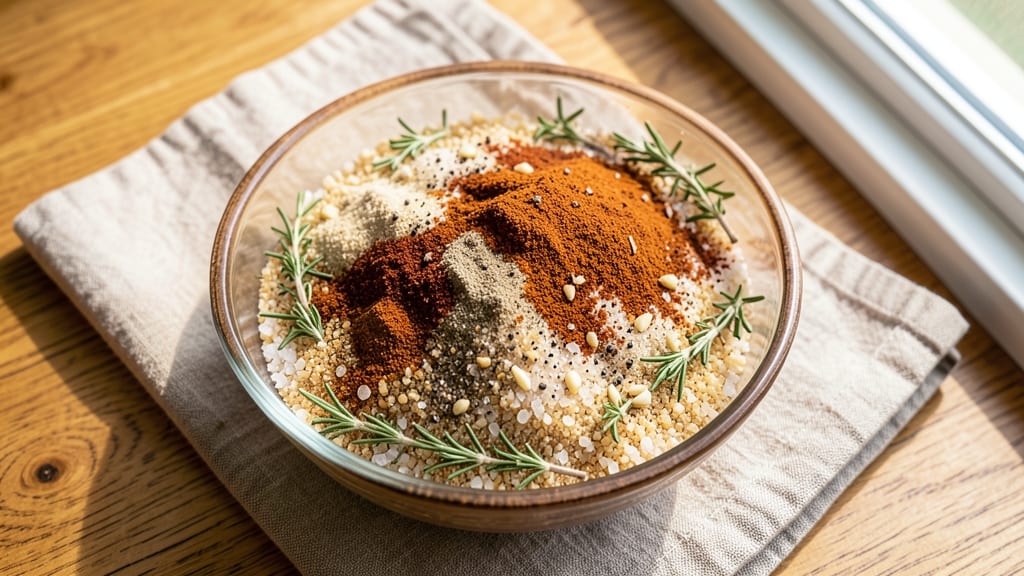
This McCormick-inspired rotisserie chicken seasoning transforms ordinary birds into golden, crisp-skinned masterpieces with just a few simple ingredients. Growing up in small-town Georgia, I learned that the right spice blend could turn a simple chicken into the centerpiece of any meal—no fancy techniques required.
The secret lies in balancing salt, paprika, and herbs to create a crust that locks in moisture while delivering that signature rotisserie aroma.
The blend is foolproof and designed for professional results at home, using only five key spices that work together to enhance natural chicken flavors. You’ll need just 1 tablespoon of this dry mix per pound of chicken, applied either before or after cooking for maximum impact.
Unlike store-bought versions, this recipe lets you control the saltiness and heat level to suit your taste.
What makes this seasoning special is its ability to deliver crispy skin without drying out the meat inside—a challenge I’ve perfected over years of testing. The combination of coarse salt and smoked paprika creates a caramelized crust that’s irresistibly crunchy, while garlic and onion powder add depth.
This isn’t just a seasoning; it’s a game-changer for anyone who wants restaurant-quality rotisserie chicken at home.
Use it on whole chickens, thighs, or even drumsticks—just sprinkle, pat gently, and let the heat work its magic. Store the dry mix in an airtight container for up to six months, ready to elevate your next chicken dinner. Let’s get started!
Ingredients for rotisserie chicken seasoning mccormick
Five spices, one tablespoon per pound—this blend unlocks restaurant-style rotisserie flavor at home.
| Ingredient | Amount | Notes |
|---|---|---|
| Coarse Kosher Salt 🧂 | 3 tbsp | Diamond Crystal preferred for texture |
| Smoked Paprika 🌶️ | 2 tbsp | High-quality for authentic aroma |
| Garlic Powder 🧄 | 1 ½ tbsp | Freshly ground preferred |
| Onion Powder 🧅 | 1 ½ tbsp | Fine grind for even distribution |
| Ground Black Pepper 🌶️ | 1 tbsp | Freshly cracked for potency |
| Dried Thyme 🍃 | 1 tsp | French thyme for best flavor |
| Ground Ginger 🌿 | ½ tsp | Freshly ground for warmth |
| Ground Cumin 🌿 | ½ tsp | Toasted for deeper flavor |
The coarse kosher salt is non-negotiable—it creates that signature crispy crust without drying out the meat. Diamond Crystal is my go-to because its flaky texture clings perfectly, but any coarse salt will work. For smoked paprika, Penzeys or McCormick's premium blend deliver that authentic rotisserie aroma. I buy mine in bulk at Whole Foods or Costco—it lasts for years. The garlic and onion powders? Freshly ground versions make all the difference, but pre-ground works in a pinch. Pro tip: Toast your spices in a dry pan for 30 seconds before blending to wake up their flavors.
No smoked paprika? Regular paprika plus a pinch of liquid smoke gets you close. Want more heat? Add cayenne (start with 1/4 tsp). The thyme can be swapped for dried oregano, but it loses that subtle earthiness. Ground ginger adds warmth—if you hate it, skip it. For cumin, toasted whole seeds ground fresh are ideal, but pre-ground is fine. This mix works on everything from whole chickens to drumsticks. Just remember: 1 tablespoon per pound of chicken, applied either before or after cooking for maximum crispiness.
Store this blend in an airtight container away from light—it stays potent for up to six months. I portion it into small jars so I always have it ready. For extra crispy skin, apply the seasoning 1 hour before cooking and pat it gently. The mix doubles as a dry rub for roasted veggies or pork chops—just adjust the salt to taste. Freeze extras in ice cube trays for single-use portions.
Why You'll Love This Recipe
- Five-Ingredient Magic: I swear, this mix is the kind of shortcut that makes you feel like a chef. Just shake those pantry staples—smoked paprika, garlic powder, even a pinch of black pepper—and boom, you’ve got flavor that turns store-bought chicken into something ridiculously good.
- Smoky Garlic Kiss: That smoked paprika gives it this deep, woodsy warmth, while the garlic and onion powders add a punch that lingers. Honestly? It’s the kind of seasoning that makes you pause mid-bite—like, "Wait, is this homemade?"
- Leftovers That Don’t Suck: Between us, rotisserie chicken leftovers are usually sad. Not this way. The seasoning clings so well that even day-old chicken tastes like it just came off the grill. I’ve used it for tacos, salads, even sandwiches—no one bats an eye.
- Pantry Hero: No fancy ingredients, no last-minute grocery runs. If you’ve got salt, pepper, and those three spices, you’re golden. I’ll be real: I’ve made this with whatever was in my cabinet, and it still delivers. Budget-friendly? Absolutely. Stress-free? Even better.
Step-by-step instructions for crafting McCormick rotisserie seasoning
Here's how to blend these spices into a perfect seasoning blend that delivers crispy skin and juicy meat every time.
Measure Ingredients Precisely for Maximum Flavor
Start by gathering all your ingredients and measuring them exactly as listed. I use a small mixing bowl that fits all components comfortably—this prevents spills and makes blending easier. The coarse kosher salt should be measured first, as it forms the base of your seasoning. I like to use a scale for accuracy with the smaller measurements like ground ginger and cumin, where even slight variations make a difference.
Here's the thing—don't substitute any ingredients. The smoked paprika provides that signature rotisserie aroma, while the freshly ground black pepper adds necessary heat. The combination of garlic powder and onion powder creates depth, and the thyme brings an earthy complexity that rounds out the blend. Each component plays a crucial role in achieving that restaurant-quality flavor profile.
Combine Dry Ingredients with Gentle Mixing Technique
Add the 3 tablespoons of coarse kosher salt to your mixing bowl first. Then incorporate the 2 tablespoons of smoked paprika, followed by the 1.5 tablespoons each of garlic powder and onion powder. I use a small whisk or rubber spatula for this step—it helps break up any clumps that might form with the salt.
Next, add the 1 tablespoon of ground black pepper, 1 teaspoon of dried thyme, and finally the 0.5 teaspoon each of ground ginger and cumin. The reason for this order matters: starting with the salt prevents the more delicate spices from floating away when you begin mixing. Gently fold everything together with your spatula, making sure to scrape the bottom and sides of the bowl to capture any stray particles.
Blend Until Uniform for Perfect Distribution
Transfer your mixing tools to a clean, dry bowl—this prevents cross-contamination with any residual moisture. Now comes the critical blending step. I use a fork or small whisk to thoroughly combine the ingredients for about 2-3 minutes, until the mixture appears completely uniform with no visible streaks of individual spices.
This is where attention to detail pays off. You're aiming for a fine, even distribution where each bite of your rotisserie chicken gets that perfect balance of smoky, savory, and slightly spicy flavors. If you're using this seasoning for something other than chicken, like roasted vegetables or even popcorn, this uniform blend ensures consistent results every time.
Store Properly to Preserve Freshness and Flavor
Once your seasoning blend is perfectly mixed, transfer it to an airtight container. I prefer glass jars with tight-sealing lids—they maintain freshness longer than plastic containers. Label your jar clearly with the contents and date, especially if you'll be storing it for more than a few weeks.
Store your seasoning in a cool, dark place like your pantry. When used properly, this blend will keep its maximum flavor for up to 6 months. The key to preserving that fresh-ground quality is keeping it away from moisture and heat sources. Remember, freshly ground spices always deliver better flavor, so if you notice a loss of aroma, it's time to make a fresh batch.
Pro Tips For Making Rotisserie Chicken Seasoning Mccormick
- Toast Your Spices: Heat the smoked paprika and spices in a dry pan for 30 seconds before mixing—it deepens the flavor and cuts through the bitterness that can sneak into jarred blends. (Yes, even if you’re impatient like me, this makes a real difference.)
- Salt in Layers: Sprinkle half the kosher salt before cooking, then the rest after—this guarantees the crust forms properly without over-salting the skin. I learned this the hard way when my first batch turned out bland but soggy.
- Skip the Clumping: Whisk the garlic powder and onion powder into the salt before adding the smoked paprika, or you’ll end up with a gritty mess. A quick sift through a fine-mesh strainer fixes it, but prevention is easier.
- Store It Right: Keep the seasoning in an airtight container away from light for up to 2 weeks—moisture ruins it fast. I used to toss it in a jar with leftover spices, but now I double-wrap it in parchment before sealing. (Your future self will thank you.)
Storing and reheating this recipe
Refrigerator Storage
Your freshly made rotisserie seasoning blend stays fresh in the fridge for up to 3 months if stored properly. I transfer mine to a small amber glass jar with a tight-sealing lid—amber glass blocks light that degrades spices faster.
Place it in the coldest part of your fridge (usually the back of the bottom shelf) where temperatures stay consistently 38°F or below. The cool, dark environment preserves the aromatic oils in the spices.
Freezer Preservation
For long-term storage, freeze your seasoning in 1-tablespoon portions using ice cube trays. Once frozen solid, transfer the cubes to a labeled freezer bag and flatten to save space. This method keeps the blend potent for up to 12 months.
I use this technique when I know I won't use all the seasoning within 3 months—it's perfect for batch cooking or holiday prep. Just let a portion thaw overnight in the fridge before using.
Reviving Stale Seasoning
If your seasoning loses some aroma over time, revive it by toasting in a dry skillet over medium-low heat for 1-2 minutes, stirring constantly. The heat reactivates the essential oils. I also add ½ teaspoon of fresh lemon zest per tablespoon of seasoning to brighten flavors.
This trick works wonders for blends that have been stored for 4-6 months. For extra crispy skin, apply the revived seasoning 30 minutes before cooking and pat gently.
Reheating Seasoned Chicken
When reheating seasoned rotisserie chicken, I avoid the microwave—it makes the skin rubbery. Instead, heat in a 400°F oven for 15-20 minutes with 1 tablespoon of chicken broth in the pan. The broth keeps the meat moist while the oven finish crisps any softened skin.
For leftover pieces, I also use a cast-iron skillet over medium heat for 2-3 minutes per side—this restores that golden crust beautifully.
Portion Control Tips
Measure out single-use portions (1 tablespoon per pound of chicken) into small containers before storing. I use 1-ounce plastic weigh boats for this—just scoop, weigh, and store. This prevents over-seasoning when you're in a hurry.
For extra crispy skin, apply the seasoning 1 hour before cooking and pat it gently with a paper towel to help it adhere better. The blend works equally well on thighs, drumsticks, or even chicken breasts.
Special Occasion Prep
For holiday meals, make double batches of the seasoning and store in vacuum-sealed bags with the date written on masking tape. This eliminates exposure to air and extends freshness.
When prepping your holiday bird, apply the seasoning 2 hours before roasting—this gives it time to penetrate the skin for maximum crispiness. I also like to add 1 teaspoon of brown sugar to each tablespoon of seasoning for extra caramelization during the cook.
Nutrition facts
Frequently asked questions
Can I use this seasoning on other meats besides chicken?
This blend works beautifully on pork chops, turkey thighs, or even duck breasts. The key is using 1 tablespoon per pound of meat, applied 30-60 minutes before cooking. For fatty meats like duck, reduce the salt slightly (use 2 tablespoons instead of 3) to avoid overpowering flavors.
How do I get the crispiest skin possible with this seasoning?
Pat your chicken dry with paper towels first—moisture is the enemy of crispy skin. Apply the seasoning 1-2 hours before cooking and let it sit uncovered in the fridge. For extra crunch, use a meat thermometer: pull the chicken when it reaches 165°F internal temp, then let it rest 10 minutes before slicing.
What's the best way to store leftover seasoning?
Keep it in an airtight container away from light and heat—glass jars with tight lids work best. For long-term storage, portion into 1-tablespoon servings using ice cube trays, then transfer to a freezer bag. This blend stays potent for 6 months at room temp or 12 months in the freezer.
Can I make this seasoning less spicy?
Yes! Reduce the black pepper to ½ tablespoon and omit the cayenne if you add it. For a milder version, also cut the smoked paprika to 1.5 tablespoons. The ginger and cumin provide warmth without heat, so you can keep those amounts the same for depth without spice.
Why does my chicken turn out dry when using this seasoning?
Overcooking is usually the culprit. Remove chicken from heat at 165°F internal temp—it'll continue cooking while resting. Also ensure your bird isn't overcrowded in the oven or rotisserie. For extra moisture, brine the chicken 4-12 hours before seasoning (use ¼ cup salt per gallon of water).