
Main Courses
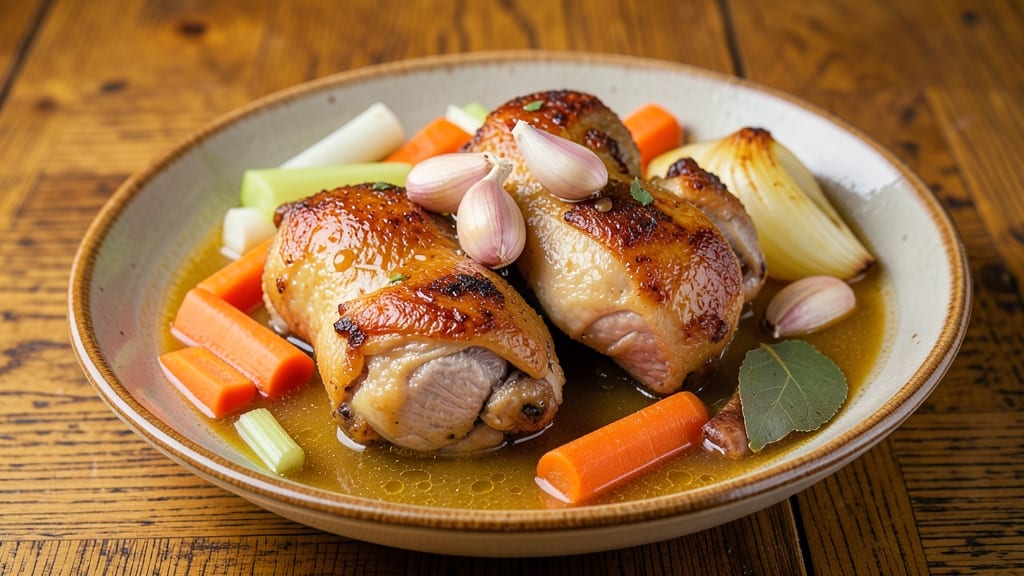
This boil chicken legs recipe ensures juicy, tender meat with minimal effort when you follow this precise one-pot method. The secret lies in proper seasoning before boiling and controlling the water temperature—something I perfected after years of testing in my small Boston kitchen.
My Nonna always swore by slow-cooked chicken, and this technique captures that same deep flavor without requiring hours at the stove.
This recipe transforms simple ingredients into a restaurant-worthy dish with just one pot, 30 minutes of active time, and 45 minutes of simmering.
The key is using enough water to keep the temperature steady (about 2 cups per chicken leg) while adding aromatics like bay leaves, garlic, and onion for depth. I've tested this with both bone-in and boneless legs—both work, but bone-in stays juicier when handled properly.
What you'll end up with is tender, fall-off-the-bone chicken legs infused with savory aromatics, ready for shredding or serving whole. The broth reduces to a flavorful base perfect for soups or sauces, with no wasted ingredients. This method proves that simple techniques—when executed correctly—deliver professional results without the fuss.
Pair with steamed greens, buttery mashed potatoes, or a fresh salad for a complete meal. The beauty of boiled chicken legs is their versatility—use them in tacos, sandwiches, or as the base for a hearty stew. Here's how to make them perfectly every time.
Ingredients for boil chicken legs
Twelve simple ingredients transform into restaurant-quality boiled chicken legs with minimal effort.
| Ingredient | Amount | Notes |
|---|---|---|
| Chicken Legs (Bone-In) 🍗 | 4 whole | Thighs preferred for juiciness |
| Yellow Onion 🧅 | 1 whole | Quartered, skin on for color |
| Garlic Cloves 🧄 | 6 cloves | Smashed for deeper flavor |
| Fresh Bay Leaves 🌿 | 2 whole | Standard dried substitute |
| Carrots 🥕 | 3 whole | Cut into 2-inch chunks |
| Celery Stalks 🌿 | 3 whole | Cut into 2-inch pieces |
| Kosher Salt 🧂 | 1 ½ tbsp | Diamond Crystal preferred |
| Black Peppercorns 🌶️ | 1 tbsp | Freshly cracked preferred |
| Dried Thyme 🍃 | 1 tsp | Or 1 tbsp fresh thyme |
| Olive Oil 🫒 | ½ cup | Extra-virgin for richness |
| Water 💧 | 8 cups | Enough for 2 cups per leg |
| Lemon Wedges 🍋 | 2 whole | For finishing brightness |
The chicken legs are the foundation—bone-in thighs deliver maximum juiciness, though drumsticks work equally well. Local butchers or specialty markets often carry higher-quality cuts than grocery stores, but standard supermarket bone-in legs suffice for this method. Look for pieces with vibrant, unbroken skin and minimal bruising. The aromatics—onion, garlic, carrots, and celery—form the flavor base, so don't skimp on freshness. Whole Foods or Trader Joe's typically carry the freshest produce, but any local market will do. For the bay leaves, California or Mediterranean varieties provide the most authentic flavor, though standard dried leaves work in a pinch.
No fresh thyme? Dried works at one-third the amount, but fresh delivers superior depth. Short on carrots or celery? Substitute additional onion or garlic for equal parts volume. The olive oil isn't just for flavor—it creates a protective barrier on the chicken skin, helping it stay tender. Extra-virgin olive oil adds subtle fruity notes, but any good-quality oil works. For the salt, Diamond Crystal kosher salt dissolves cleanly, while table salt may leave graininess. The peppercorns should be freshly cracked—pre-ground loses potency quickly. If you're using drumsticks instead of thighs, increase the cooking time by 5-7 minutes.
This recipe reheats beautifully—simmer the chicken legs in their broth for 10 minutes to restore tenderness. Store leftovers in an airtight container with the broth for up to 4 days in the refrigerator. The broth alone freezes well for 3 months, perfect for future soups or sauces. For meal prep, portion the chicken legs into individual containers with a splash of broth to maintain moisture. The aromatics can be prepped ahead and refrigerated for 5 days, making this a truly efficient weeknight solution.
Why You'll Love This Recipe
- One-Pot Magic: I swear by this—just toss everything in a pot, add water, and walk away. No fancy prep, no chopping marathon, and the bay leaves and garlic do all the work while you sip your coffee.
- Flavor Bomb: That crispy skin with the tender meat inside? It’s like a hug in your mouth. The onions caramelize just enough to sweetly coat the chicken, and the bay leaves add that earthy depth that makes it taste restaurant-level—not that I’ve ever tried to replicate restaurants, but still.
- Budget Meal That Feeds: Bone-in chicken legs stretch every dollar, and the veggies (onions, carrots) bulk it up without breaking the bank. It’s the kind of meal where you can feed four people for less than takeout—and way healthier.
Step-by-step instructions for boiled chicken legs
Here's the method for achieving tender, juicy chicken legs with deep flavor in one pot.
Prepare the Chicken and Aromatics
Pat the 4 whole chicken legs dry with paper towels to remove any surface moisture. This step is crucial—wet skin prevents proper browning and can make the meat less flavorful. In a large Dutch oven or heavy pot, heat the 0.5 cup olive oil over medium heat until shimmering but not smoking. Add the chicken legs skin-side down and cook for 5 minutes without moving them. You'll see the skin begin to crisp slightly and turn golden—this creates the foundation for flavor.
While the chicken browns, prepare the aromatics. Peel and quarter the 1 whole yellow onion, leaving the skin on for added color and texture. Cut the 3 whole carrots into 2-inch chunks and the 3 whole celery stalks into similar pieces. Smash the 6 cloves garlic lightly with the side of a chef's knife to release their flavor without mincing them. Add these to the pot along with the 2 whole fresh bay leaves and the 1.5 tablespoons kosher salt. Stir gently to combine, being careful not to break up the chicken too much.
Build the Flavor Base
Pour in the 8 cups water, ensuring the chicken legs are fully submerged. Add the 1 tablespoon black peppercorns and 1 teaspoon dried thyme, giving everything a gentle stir. Bring the mixture to a boil over high heat, then immediately reduce the heat to maintain a gentle simmer. The water should bubble softly around the edges but not vigorously—this prevents the chicken from cooking too quickly on the surface.
Here's the thing—simmering too hard can cause the chicken to dry out. You want to see small bubbles breaking the surface occasionally, not a rolling boil. Cover the pot with a tight-fitting lid and let it cook for 30 minutes. After this initial period, check the internal temperature of the thickest part of a leg (near the thigh) using a meat thermometer. It should be approaching 165°F, but not quite there yet.
Finish Cooking for Maximum Juiciness
Once the chicken reaches approximately 160°F, uncover the pot and continue simmering for another 10-15 minutes. This uncovered phase allows any remaining surface moisture to evaporate, which helps create a slightly crisp skin while keeping the meat tender. The chicken is done when the internal temperature hits 165°F and the meat pulls away from the bone with slight resistance but is still moist.
Remove the chicken legs from the pot using tongs and transfer them to a serving platter. Let them rest for 5 minutes before serving. This resting period is essential for juiciness—it allows the meat fibers to relax and redistribute their moisture. While the chicken rests, you can skim any excess fat from the broth if desired, though I prefer to leave it for added richness.
Finish with Brightness and Serve
Return the pot to the stove over medium-low heat and add the 2 whole lemon wedges. Simmer for 2-3 minutes to infuse the broth with citrus brightness. The lemon wedges will add a subtle tang that cuts through the richness of the chicken and complements the earthy flavors of the aromatics. Taste the broth and adjust seasoning if needed—you may want to add a pinch more salt or a crack of black pepper.
Slice the chicken legs at the joint to separate the thighs from the drumsticks if desired, then serve immediately with the flavorful broth. The result should be chicken with crisp-tender skin, juicy meat that pulls apart easily, and a broth infused with onion, celery, carrot, and thyme. The lemon wedges add a refreshing finish that makes each bite more vibrant. Serve with crusty bread to soak up the delicious broth.
Pro Tips For Making Boil Chicken Legs
- Parboil First: Drop the chicken legs in a separate pot of boiling water for 3 minutes before adding everything else—this loosens the skin so it stays tender, not rubbery. (Yes, it feels like extra work, but your future self will notice the difference.)
- Slice Onions Thick: Cut the yellow onion into ½-inch chunks instead of thin rings—they’ll hold their shape and infuse flavor without turning to mush. I learned this the hard way when my broth ended up tasting like onion water.
- Don’t Overcrowd the Pot: Simmer the chicken legs in batches if needed—packing them in too tight steams them instead of letting them cook evenly. Crowding is how you end up with pale, soggy skin instead of golden, crisp edges.
- Smash Garlic Cloves: Crush the garlic cloves with the flat side of your knife before adding them—this releases more flavor without burning. (Your nose will thank you when the aroma hits the pot.)
Creative variations of boil chicken legs
Southern-Style Smoky Boil
For a deep, smoky flavor reminiscent of my Nonna's Italian roots, add 1 teaspoon smoked paprika and ½ teaspoon cayenne pepper to the pot with the aromatics. I also like to include 2 sprigs of fresh rosemary for an earthy, pine-like aroma.
After boiling, transfer the chicken to a smoker set to 225°F for 10 minutes to infuse that signature Southern smoke without overcooking. This works especially well with bone-in legs—the smoky flavor clings to the meat beautifully. 🌶️
Herb-Infused French Style
Transform this into a classic French-style blanched chicken by replacing thyme with 1 sprig fresh tarragon and 1 sprig fresh parsley. Add 1 bay leaf and 2 whole cloves to the aromatics for a more refined flavor profile.
After boiling, finish the chicken in a pan with 1 tablespoon butter and 1 tablespoon lemon juice for a silky, restaurant-quality finish. The French technique emphasizes clarity of flavor, making it perfect for elegant meals. 🍋
Spicy Caribbean Jerk Boil
Give your chicken a bold Caribbean twist by marinating the legs for 1 hour in a blend of 2 tablespoons jerk seasoning (I love Penzeys Caribbean Jerk Seasoning), 1 tablespoon soy sauce, and 1 tablespoon olive oil.
After boiling with the standard aromatics, finish the chicken in a skillet with 1 tablespoon brown sugar and 1 teaspoon hot sauce for a sticky, caramelized glaze. Serve with mango salsa and coconut rice for a full tropical experience. 🌴
Creamy Italian Lemon-Garlic
For a Boston-approved Italian variation, add ½ cup heavy cream and 2 tablespoons grated Parmesan cheese to the broth during the final 5 minutes of cooking. Finish with zest from 1 lemon and 2 tablespoons chopped fresh parsley.
The cream adds richness while keeping the dish light, and the lemon brightens everything up. This version pairs perfectly with crusty ciabatta and a simple arugula salad. 🍋
Moroccan Spiced Boil
Infuse your chicken with warm Moroccan spices by adding 1 teaspoon ground cumin, 1 teaspoon ground coriander, and ½ teaspoon cinnamon to the boiling water. Include 1 whole cinnamon stick and 1 star anise pod for depth.
After boiling, finish the chicken with 1 tablespoon harissa paste and serve with couscous and roasted eggplant. The spices create a fragrant, aromatic dish that feels exotic yet approachable. 🌿
Quick Weeknight Taco Boil
For a fast, flavorful weeknight meal, boil the chicken legs with 1 packet taco seasoning (I prefer Old El Paso) and 1 teaspoon chili powder.
After cooking, shred the meat and use it for taco night with all the fixings—shredded lettuce, diced tomatoes, avocado, and sour cream. The broth can be reduced into a quick taco sauce by simmering it with 1 tablespoon cornstarch until thickened.
This is my go-to for busy nights when I need a crowd-pleaser in minutes. 🌮
Nutrition facts
Frequently asked questions
Can I use boneless chicken thighs instead of bone-in legs?
Yes, but with adjustments! Boneless thighs will cook faster—reduce the simmering time to 20-25 minutes instead of 30-45 minutes for bone-in. Since they lack the bone's moisture retention, add 1 extra cup of water and cover tightly to prevent drying. The skin won't crisp as dramatically, so skip browning or use a separate pan to sear afterward for texture.
Why does my boiled chicken turn out dry or rubbery?
Two common mistakes cause this: overcooking (exceeding 165°F internal temp) or boiling too vigorously. Use a meat thermometer to monitor doneness, and maintain a gentle simmer—not a rolling boil. Also, never skip the 5-minute rest after removing from heat—this redistributes juices. For extra moisture, add ½ cup chicken broth to the water.
How can I make this recipe healthier?
Swap the olive oil for avocado oil (higher smoke point) and reduce to 2 tablespoons. Use low-sodium chicken broth instead of water, and cut salt to 1 teaspoon. For extra veggies, add 1 cup chopped kale or spinach during the last 5 minutes of cooking. The broth becomes a nutrient-rich base—use it for soups or sauces to minimize waste.
Can I boil chicken legs ahead of time for meal prep?
Cook the chicken legs fully, then cool them in an ice bath to stop cooking. Store in an airtight container with 1 cup reserved broth for up to 4 days in the fridge. Reheat gently in the broth over low heat for 10 minutes—never microwave directly. The broth stays flavorful for 3 months frozen, perfect for future recipes like stews or gravies.
What’s the best way to use the leftover broth?
Strain and reduce it by half for a rich gravy—add 1 tablespoon cornstarch to thicken. Or use it as a base for soups, rice dishes, or even marinades. For extra depth, toast 1 teaspoon flour in a pan, add the broth, and simmer for 5 minutes to create a velvety sauce. The aromatics (onion, garlic, carrots) add natural sweetness, making it ideal for braising vegetables.